

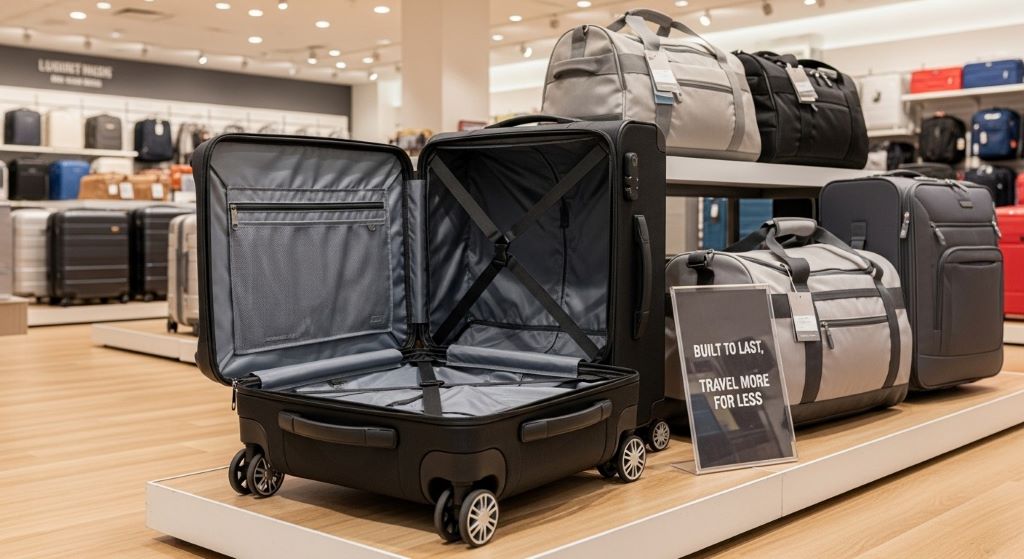
28 Feb How to Find Affordable Luggage for Travel Without Compromising Quality
Travel opens up a world of possibilities, but the cost of quality gear can quickly add up. Many travelers assume they must choose between affordability and durability when shopping for luggage. However, this belief couldn’t be further from the truth. With the right knowledge and approach, you can find reliable travel gear that fits your budget without falling apart after a few trips.
The luggage industry has evolved significantly over recent years. Advances in manufacturing and materials mean that budget-friendly options now rival premium brands in many aspects. Understanding what truly matters in luggage construction helps you identify genuine value and avoid wasting money on features you don’t need.
This comprehensive guide will show you exactly how to find affordable luggage that stands the test of time. You’ll learn which features provide real value, which materials offer the best durability for the price, and where to find the best deals without sacrificing quality.
Understanding What Makes Luggage Truly Durable
Before diving into shopping strategies, it’s important to understand what separates quality luggage from pieces that won’t survive a single rough baggage handler. Durability comes from several key factors working together, not just one premium feature.
The shell material forms the foundation of any suitcase’s strength. Hard-shell options include polycarbonate, ABS plastic, and polypropylene. Each material offers different benefits at various price points. Soft-shell luggage typically uses ballistic nylon or polyester, with higher denier numbers indicating thicker, more durable fabric.
Zipper quality often determines how long your luggage lasts. Heavy-duty zippers with self-repairing coils rarely fail, while cheap zippers can break on the first trip. Look for brands that use YKK or similar quality zipper manufacturers. The number of teeth per inch and the gauge of the zipper tape both indicate quality.
Wheel construction affects both durability and maneuverability. Inline skate wheels made from polyurethane last longer than cheap plastic wheels. Multi-directional spinner wheels offer convenience, but they also create more potential failure points. Consider your typical travel style when evaluating wheel systems.
Handle mechanisms endure significant stress during travel. Telescoping handles should extend and retract smoothly without wobbling. Internal metal tubing provides better support than plastic alternatives. Side and top handles need reinforced stitching or secure attachment points to prevent tearing.
The True Cost of Lightweight Luggage
Weight restrictions on airlines have made lightweight luggage increasingly popular. However, reducing weight while maintaining strength requires careful material selection and engineering. Understanding this balance helps you evaluate whether a lightweight piece is truly a good value.
Modern lightweight luggage achieves reduced weight through advanced materials and strategic design. Manufacturers remove unnecessary bulk while reinforcing stress points. This approach maintains durability while making your suitcase easier to lift and maneuver through airports.
Many affordable options achieve impressive weight reduction without compromising strength. Therefore, you don’t need to pay premium prices for lightweight benefits. Focus on finding pieces that balance weight with the durability features mentioned earlier.
Be wary of extremely lightweight options at very low prices. Some manufacturers reduce weight by using thinner materials that won’t withstand normal travel wear. A suitcase that saves two pounds but breaks after three trips isn’t a bargain. Always check customer reviews for feedback on long-term durability.
Additionally, consider how weight affects airline fees. Most carriers charge for overweight bags, and starting with lighter luggage gives you more capacity for your belongings. This advantage can save you money over time, making a slightly more expensive lightweight option worth the investment.
Smart Shopping Strategies for Budget Travelers
Finding affordable quality luggage requires strategic shopping rather than just searching for the lowest price. Several approaches consistently deliver the best value for budget-conscious travelers.
Shop during off-peak seasons when luggage goes on sale. Retailers typically offer deep discounts in late winter and early fall when fewer people are buying travel gear. Black Friday and end-of-season clearances also provide excellent opportunities to find quality pieces at reduced prices.
Consider previous-year models that retailers are clearing out. Luggage designs change slowly, and last year’s model often performs identically to the current version. You can save 30 to 50 percent by choosing a discontinued color or slightly older design.
Online retailers often have better prices than physical stores due to lower overhead costs. However, buying online means you can’t physically inspect the luggage before purchasing. Read detailed reviews and check return policies carefully. Many online sellers offer free returns, eliminating the risk of buying sight unseen.
Outlet stores and factory outlets offer genuine bargains on quality luggage. These pieces may have minor cosmetic imperfections that don’t affect functionality. A small scratch or color irregularity becomes invisible after your first trip anyway, making these excellent value options.
Comparison shop across multiple retailers before making a purchase. Prices can vary significantly for the same product. Use price tracking tools and browser extensions that alert you when prices drop on items you’re watching.
Identifying Quality Markers in Budget Luggage
Certain features and construction details reveal whether an affordable suitcase will last or fail quickly. Learning to spot these markers helps you make informed decisions regardless of brand or price point.
Examine the corner reinforcements on hard-shell luggage. Quality pieces have thicker material or additional support at corners, which absorb the most impact. Soft-shell luggage should have reinforced corner guards that protect the fabric from abrasion.
Check how the shell attaches to the frame. Screws or rivets indicate stronger construction than simple snap-fit connections. You should see multiple secure attachment points rather than just a few weak connections.
Interior lining quality matters more than many travelers realize. Durable lining protects your belongings and prevents the shell from cracking under pressure. Look for thick, well-attached linings with reinforced pockets and compression straps.
Wheel housings should sit flush with or recessed into the case. Protruding wheel assemblies catch on conveyor belts and escalators, increasing the likelihood of damage. The wheel axles should be metal rather than plastic for better longevity.
Test all moving parts before purchasing. Handles should lock firmly in both extended and retracted positions. Zippers should move smoothly without snagging. If something feels flimsy in the store, it will definitely break during travel.
Material Choices That Deliver Value
Different materials offer various advantages, and understanding these differences helps you choose the best option for your budget and travel style. No single material is universally best; instead, each has situations where it excels.
Polycarbonate hard shells provide excellent impact resistance and flexibility. This material absorbs shocks rather than cracking, making it ideal for checked luggage. Mid-range polycarbonate suitcases often perform as well as premium options, making them excellent value choices.
ABS plastic costs less than polycarbonate while still offering good durability. It’s slightly less flexible but remains a solid choice for a durable cheap suitcase. Many reliable budget options use ABS construction with reinforced corners for added protection.
Polyester fabric in high denier ratings provides excellent durability for soft-shell luggage. Look for ratings of 600D or higher for the best balance of strength and affordability. Polyester resists water better than many people assume, especially with a quality coating.
Ballistic nylon offers superior strength and abrasion resistance compared to standard polyester. While more expensive, it’s still affordable in mid-range luggage. This material particularly suits travelers who frequently handle their bags roughly or travel to destinations with primitive transportation.
Hybrid designs combining hard and soft materials offer interesting advantages. A hard shell with soft expanding panels provides impact protection while allowing extra packing capacity when needed. These designs often deliver excellent value in the mid-price range.

Size Selection and Value Optimization
Choosing the right size affects both the initial purchase price and long-term value. Buying the wrong size means either purchasing additional pieces later or dealing with airline fees and inconvenience.
Carry-on size maximizes value for most travelers. Avoiding checked bag fees saves money on every flight. Additionally, carry-on luggage suffers less abuse than checked bags, extending its lifespan. Verify that your chosen carry-on meets size requirements for your most frequently used airlines.
Medium checked bags offer the best price-to-capacity ratio. They provide ample packing space without the extra cost of larger pieces. For most trips lasting a week or less, a medium checked bag combined with a carry-on provides sufficient capacity.
Large suitcases make sense only if you regularly take extended trips or travel with multiple people. They cost more initially and often incur overweight baggage fees. Unless you truly need the capacity, investing in quality medium-sized pieces provides better value.
Consider expandable designs that offer flexibility without requiring multiple suitcases. Many affordable options include expansion zippers that add several inches of depth when needed. This feature provides extra capacity for return trips with souvenirs without requiring a separate bag.
Two-piece sets often cost less per item than buying pieces individually. However, only buy sets if you actually need both sizes. Paying for luggage you won’t use wastes money regardless of the per-piece price.
Where Budget and Premium Luggage Diverge
Understanding where expensive luggage justifies its cost versus where budget options perform equally well helps you allocate your budget wisely. Some premium features provide genuine benefits, while others are primarily cosmetic.
Warranty coverage represents a significant difference between budget and premium brands. Expensive luggage often includes lifetime warranties covering defects and even airline damage. Budget options typically offer one to three-year warranties covering only manufacturing defects. However, if your budget luggage lasts five years, you’ve still gotten good value even without a lifetime warranty.
Aesthetic details like leather accents, designer fabrics, and unique hardware primarily affect appearance rather than function. These features significantly increase cost without improving durability. Choose simpler designs to maximize your budget allocation toward functional features.
Brand reputation does correlate somewhat with quality, but many lesser-known manufacturers produce excellent products. Premium brands invest heavily in marketing and retail presence, costs that get passed to consumers. Research-based purchasing allows you to find quality from brands that spend less on advertising.
Innovative features like built-in scales, GPS tracking, or USB charging ports add convenience and cost. Evaluate whether you’ll actually use these features regularly. Basic luggage with excellent construction often provides better value than feature-rich pieces with compromised durability.
Customer service and replacement part availability favor premium brands. They maintain better parts inventory and repair services. However, many budget brands now offer decent customer support and common replacement parts like wheels and handles.
Maintaining Your Investment
Proper care significantly extends luggage lifespan regardless of price point. These maintenance practices cost nothing but add years to your suitcase’s useful life.
Clean your luggage after every trip, removing dirt, spills, and debris. Use appropriate cleaners for your luggage material. Hard shells wipe clean with damp cloths, while fabric pieces may need spot treatment or occasional deeper cleaning. Built-up dirt accelerates wear on zippers and wheels.
Store luggage properly between trips. Keep pieces in a cool, dry place away from direct sunlight. Avoid storing heavy items on top of luggage, which can deform frames and shells. Empty all pockets to prevent forgotten items from creating odors or attracting pests.
Lubricate moving parts periodically. A small amount of silicone spray on zippers keeps them moving smoothly. Spinner wheel axles benefit from occasional lubrication, preventing squeaking and extending wheel life. These simple maintenance tasks take minutes but prevent many common failures.
Inspect your luggage before each trip. Check for loose wheels, weakened zippers, or damaged shells. Addressing small issues immediately prevents them from becoming trip-ruining failures. Many problems can be repaired inexpensively if caught early.
Pack properly to protect your luggage from internal damage. Use packing cubes to organize belongings and prevent items from shifting. Place heavy items near the wheels to maintain balance. Avoid overpacking, which stresses seams and zippers beyond their design limits.
Alternative Options Worth Considering
Traditional retail purchases aren’t the only way to acquire quality affordable luggage. Several alternative approaches provide access to good luggage at reduced costs.
Rental services make sense for occasional travelers. If you travel only once or twice yearly, renting quality luggage costs less than purchasing pieces you rarely use. Rental companies maintain their inventory well, ensuring you get reliable gear without the storage burden.
Second-hand luggage from reliable sources can offer incredible value. Check thrift stores in affluent neighborhoods where people donate barely used items. Online marketplaces also feature quality luggage from travelers who bought the wrong size or style. Inspect used luggage carefully for signs of excessive wear or damage.
Borrowing from friends and family suits travelers who only occasionally need luggage. Many people own multiple suitcases they rarely use simultaneously. This approach costs nothing and lets you test different styles before investing in your own.
Brand ambassador programs and product testing opportunities occasionally provide free or heavily discounted luggage. Companies seek reviews and feedback from travelers willing to document their experiences. While not guaranteed, these programs offer another avenue to access quality gear affordably.
Store credit cards and travel rewards programs sometimes offer luggage as redemption options. If you’ve accumulated points or rewards, this effectively makes the luggage free. Compare the value of reward redemptions against cash prices to ensure you’re getting good value.
Building a Complete Luggage System on a Budget
Smart travelers build their luggage collection gradually, prioritizing pieces that provide the most value for their typical travel patterns. This approach spreads costs over time while ensuring you always have appropriate luggage.
Start with one quality carry-on as your foundation piece. This single investment serves the majority of short trips and avoids checked bag fees. Choose a versatile style that works for both business and leisure travel. A good carry-on provides value for years.
Add a personal item bag next. A quality backpack or tote that fits under the seat expands your carry-on capacity significantly. This combination handles most trips up to a week. Choose a bag that also serves daily use at home to maximize utility.
Purchase a checked bag only after you’ve found your carry-on system inadequate for longer trips. Many travelers discover they can manage with carry-on luggage more often than expected. When you do buy a checked bag, apply everything you’ve learned to find the best value option.
Consider specialized pieces like garment bags or duffels based on your specific needs. Business travelers benefit from garment bags, while adventure travelers might prefer durable duffels. However, only invest in specialized luggage if your travel style truly requires it.
Replace pieces strategically as your original luggage wears out. Learning from your experiences with initial purchases helps you make even better choices the second time. Each replacement becomes an opportunity to upgrade specific features that matter most to you.
Conclusion
Finding affordable luggage without compromising quality is entirely achievable with the right approach. Focus on fundamental durability features like quality zippers, reinforced corners, and solid wheel construction rather than brand names or unnecessary features. Understanding what makes a durable cheap suitcase and recognizing the value in lightweight luggage helps you make informed decisions that serve you well for years.
Shop strategically by taking advantage of sales, outlet stores, and previous-year models. Learn to identify quality markers that indicate whether budget-friendly options will actually last. Choose materials and sizes that match your specific travel needs rather than buying based on perceived prestige or excessive capacity you’ll never use.
Remember that proper maintenance significantly extends the life of any luggage regardless of its initial cost. Simple care practices like regular cleaning, proper storage, and timely repairs transform even modest investments into long-lasting travel companions.
Building your luggage collection thoughtfully over time allows you to allocate your budget toward the pieces you actually need while maintaining quality standards. With patience and informed shopping, you’ll assemble a reliable luggage system that serves your travel adventures without breaking the bank.
Frequently Asked Questions
How much should I expect to spend on quality budget luggage?
Quality budget luggage typically ranges from seventy to one hundred fifty dollars for carry-on pieces and one hundred to two hundred dollars for checked bags. This price range offers solid construction, reliable materials, and good warranties without premium brand markups. Shopping during sales can reduce these prices by 30 to 40 percent. Avoid pieces under fifty dollars for carry-ons or under seventy dollars for checked bags, as these rarely have the durability features needed for regular travel.
Is hard-shell or soft-shell luggage more durable for the price?
Both types can be equally durable in their price ranges. Hard-shell luggage made from polycarbonate or quality ABS plastic resists impacts and water better. Soft-shell luggage made from high-denier polyester or ballistic nylon offers more flexibility and external storage options. Your choice should depend on travel style rather than assumed durability differences. Frequent flyers who check bags often prefer hard-shell for better protection, while road trippers and adventure travelers appreciate soft-shell flexibility.
Can I find reliable lightweight luggage under one hundred dollars?
Yes, several brands offer lightweight luggage under one hundred dollars that performs well for regular travel. Look for pieces weighing under seven pounds for carry-ons and under ten pounds for checked bags. Focus on models with positive reviews specifically mentioning durability over multiple trips. Budget lightweight options may lack premium features but can deliver on the essential combination of low weight and adequate strength.
What warranty coverage should I expect from affordable luggage?
Budget luggage typically offers limited warranties ranging from one to five years covering manufacturing defects. This differs from premium brands offering lifetime warranties. However, a three-year warranty on a seventy-dollar suitcase provides good value if the piece lasts five years total. Read warranty terms carefully, as many exclude airline damage or normal wear and tear. Some mid-range affordable brands offer surprisingly comprehensive warranties that rival premium competitors.
How can I tell if budget luggage will survive airline baggage handlers?
Check customer reviews for feedback about airline travel specifically. Look for reviews from frequent travelers rather than one-time users. Key durability indicators include reinforced corners, recessed or protected wheels, quality zippers, and substantial shell thickness. Test the luggage in-store by applying pressure to see if it flexes excessively. Hard-shell luggage should resist denting, while soft-shell should bounce back from compression. Avoid pieces with obvious weak points like thin plastic corners or exposed zipper pulls.
Related Topics:
Traveling with Insulin Without Refrigeration
Best Places to Visit in November: Your Best Travel Guide