

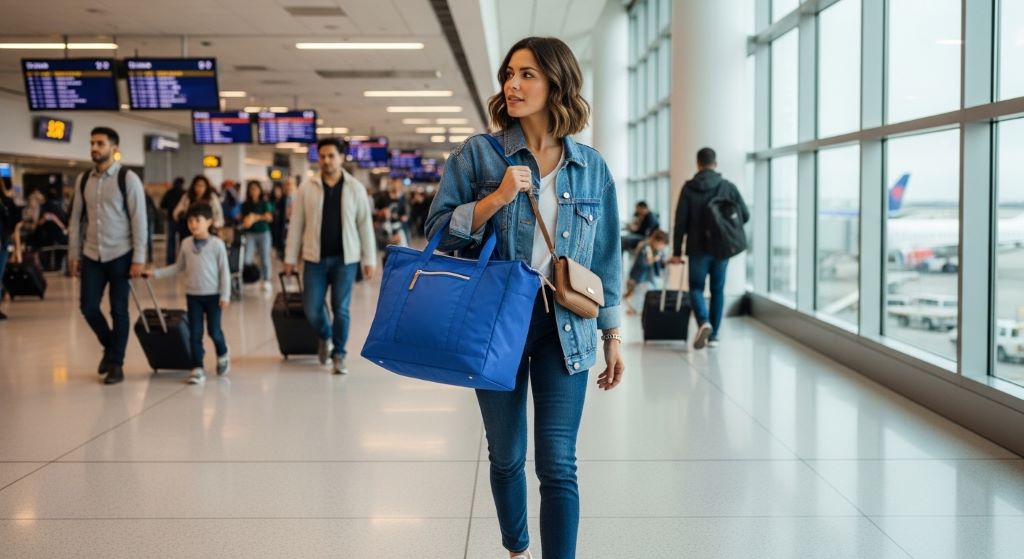
02 Apr How to Choose the Best Tote Bags for Long Flights
Long flights can be exhausting. Hours in the air mean you need everything close at hand — your headphones, snacks, chargers, passport, and more. The bag you bring on board can make or break your comfort. A great tote bag keeps you organized and stress-free. A bad one leaves you digging through a crumpled mess at 35,000 feet.
Choosing the right bag is not complicated, but it does require some thought. This guide covers everything you need to know to pick the perfect tote for your next long-haul journey.
Why Your Carry Bag Choice Matters More Than You Think
Most travelers focus on packing their checked luggage perfectly. However, the bag you keep with you in the cabin matters just as much. Your carry bag is your lifeline during the flight. It holds everything you need for comfort, entertainment, and safety.
A poorly designed bag causes problems fast. Zippers that jam, straps that dig into your shoulder, and compartments that swallow your items whole are all common complaints. Therefore, putting real thought into your selection before you travel pays off every time.
Additionally, airlines have strict rules about cabin luggage size. A bag that is too large may need to be checked at the gate, which means losing access to your essentials mid-flight. Choosing a bag that fits the rules from the start saves you hassle and extra fees.
Key Features to Look for in a Flight Tote Bag
Size and Airline Compliance
Size is the first thing to check. Most airlines allow a personal item in addition to a carry-on. Tote bags usually qualify as personal items, but they must fit under the seat in front of you.
A good rule of thumb is to look for bags no larger than 18 x 14 x 8 inches. However, always check your specific airline’s rules before you fly. Sizes vary between carriers, and some budget airlines are stricter than others.
A bag that is too small is just as frustrating. You need enough room for your travel essentials without having to cram everything in. Look for a size that balances compliance with practicality.
Material and Durability
The material of your tote matters greatly. Long flights mean the bag gets tossed into overhead bins, shoved under seats, and handled repeatedly. It needs to hold up.
Canvas totes are affordable and lightweight, but they can sag under heavy loads. Nylon is a popular choice because it is light, water-resistant, and tough. Leather looks stylish but adds weight and needs more care. For most travelers, nylon or a high-quality polyester blend is the smartest pick.
Additionally, check the stitching and zipper quality. Reinforced seams and smooth, reliable zippers are signs of a well-made bag. Weak stitching fails quickly under regular use.
Compartments and Organization
A tote with no internal structure quickly becomes a chaotic jumble. Look for bags with multiple compartments and pockets. A dedicated pocket for your passport and boarding pass saves time at the gate. A padded sleeve for a tablet or small laptop protects your devices. An exterior pocket gives you quick access to items you need without opening the main bag.
Good organization is especially important for long flights. You should be able to find what you need without waking up your neighbor or turning on the overhead light at midnight.
Comfort and Carrying Options
You will carry your tote through airports, terminals, and parking lots. Comfort matters from the moment you leave home. Look for padded or wide straps that spread the weight evenly across your shoulder.
Some totes also include a trolley sleeve on the back. This sleeve slides over the handle of your rolling suitcase, so you do not have to carry both bags at once. It is a small feature that makes a big difference during long airport walks.
What to Pack in Your Flight Tote
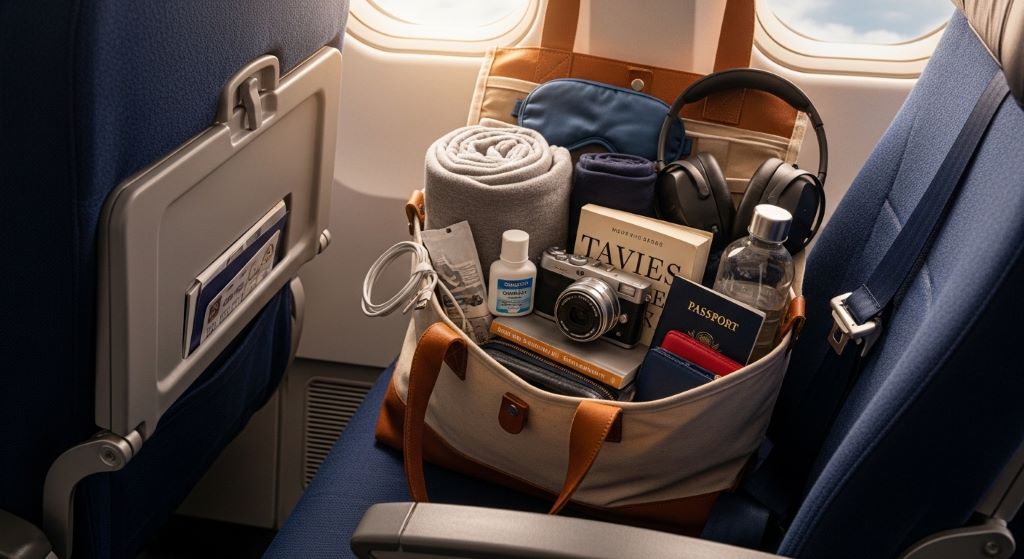
Knowing what to carry helps you choose the right size and style. Here is a practical list of what most long-haul travelers bring in their cabin bag:
- Passport and travel documents
- Noise-canceling headphones
- Phone, tablet, and chargers
- Snacks and an empty water bottle
- A light jacket or scarf
- Eye mask and earplugs
- Hand cream and lip balm
- A small book or e-reader
- Any medications you may need
When you know exactly what goes inside, it becomes easier to judge whether a bag is the right fit for your needs.
Styles of Tote Bags That Work Best for Air Travel
Open-Top Totes
Open-top totes are roomy and easy to access. However, they offer little security. Items can fall out during boarding or when the bag is placed overhead. They work best for short connections or very light packing.
Zip-Top Totes
Zip-top totes close fully, keeping your belongings safe and contained. They are the most popular choice for airplane travel gear because they balance accessibility with security. Look for a wide zipper opening so you can see everything inside at a glance.
Structured Totes
Structured totes hold their shape even when partially empty. They are easier to pack neatly and tend to look more polished. Additionally, they stand upright on their own, which makes loading and unloading at security much smoother.
Convertible Totes
Convertible totes can switch between a tote and a backpack. They are incredibly versatile. However, they tend to be slightly heavier due to the extra hardware. If you plan to do a lot of walking at your destination, a convertible style is worth the added weight.
Top Materials Compared
Choosing the right material comes down to your priorities. Here is a quick comparison to help you decide:
- Nylon: Lightweight, water-resistant, durable, and easy to clean. Best for most travelers.
- Canvas: Affordable and stylish, but less water-resistant and prone to sagging.
- Polyester: Similar to nylon, often less expensive. A solid all-around choice.
- Leather: Elegant and long-lasting, but heavy and requires maintenance.
- Recycled materials: Eco-friendly and increasingly durable. A great choice for sustainability-minded travelers.
For most long-haul flights, nylon or polyester totes offer the best combination of performance and practicality.
Brands Worth Considering
Several brands have built strong reputations for travel-ready tote bags. Longchamp’s Le Pliage line is lightweight and foldable, making it a classic travel favorite. Baggallini produces functional bags designed specifically with travelers in mind. Tumi offers premium options with excellent organization and durability. Away has also entered the bag market with clean, practical designs built for modern travel.
However, you do not need to spend a fortune. Many affordable brands on Amazon and travel retailers produce excellent bags that perform just as well for everyday travel. Therefore, set a budget first and look for the best quality within that range.
How to Test a Tote Before You Fly
Buying a tote online is convenient, but testing it in person is even better. If possible, visit a store and try the following before purchasing:
First, check how the straps feel on your shoulder with some weight added. Second, open and close every zipper to make sure they run smoothly. Third, look inside all compartments to see if they are genuinely useful or just decorative. Fourth, check whether the bag stands on its own when placed on a flat surface.
If you buy online, read recent reviews from verified buyers. Pay special attention to comments about strap comfort, zipper quality, and whether the bag holds its shape over time.
Avoiding Common Mistakes When Choosing a Travel Tote
Many travelers make the same mistakes when picking a bag. The first is choosing style over function. A beautiful bag that lacks compartments or has flimsy straps will frustrate you quickly.
The second mistake is ignoring weight. A heavy empty bag leaves less room for your belongings before you hit airline weight limits. Therefore, always check the bag’s empty weight before buying.
The third mistake is skipping the size check. As mentioned earlier, bags that are too large get gate-checked. Always measure your top choices against your airline’s personal item size rules.
Finally, overlooking security features is a common error. Pickpocketing happens in airports. A bag with a zip closure and interior pockets for valuables gives you much better protection than an open-top style.
Conclusion
Choosing the best tote for a long flight comes down to a few essential factors. Size, material, organization, and comfort are the four pillars of a great travel tote. You want a bag that fits airline rules, holds everything you need, and stays comfortable throughout a long travel day.
Whether you prefer a structured zip-top tote or a lightweight convertible style, make sure it fits your personal packing habits. The right carry bag, paired with smart packing, turns a long flight from an ordeal into a manageable — even enjoyable — experience.
Invest a little time in choosing well, and your airplane travel gear will serve you faithfully on every trip ahead.
Frequently Asked Questions
What size tote bag is allowed as a personal item on most airlines?
Most airlines allow personal items up to 18 x 14 x 8 inches. However, rules vary by carrier, so always check your specific airline’s website before you travel.
Can a tote bag replace a carry-on for a long flight?
It depends on how much you pack. A spacious tote can work for short trips, but most long-haul travelers prefer a carry-on suitcase plus a tote as their personal item for maximum storage.
What is the best material for a travel tote bag?
Nylon is generally the best choice. It is lightweight, water-resistant, and durable enough to handle the demands of regular air travel.
How do I keep my tote bag organized during a long flight?
Use pouches or small organizers inside the main compartment. Keep frequently needed items in exterior pockets. A passport wallet and a cable organizer also help keep things tidy.
Are designer tote bags worth it for travel?
Designer bags can be durable and stylish, but many mid-range travel-specific brands offer better functionality for less money. Focus on features first, and let style be a bonus rather than the deciding factor.
Related Topics:
Fly Cheap with a Large Family | Best Airlines & Hacks for Group Travel
7 Common Tourist Scams in Waikiki and How to Avoid Them (Stay Safe in Paradise!)