






Finding great sunglasses does not have to break the bank. Many men want the look and quality of luxury eyewear without paying full retail prices. Fortunately, there are smart ways to shop for premium frames at prices that make sense. This guide will walk you through everything you need to know.















How to Explore Multiple European Countries in One Trip: The Ultimate Guide for 2026

Europe’s compact size, diverse cultures, and efficient transport make it the ideal destination for a multi-country trip. Imagine sipping espresso in Rome, exploring medieval castles in Prague, and dancing at a Berlin nightclub—all in the same week. Yet, 60% of travelers struggle to plan such trips efficiently, often due to overwhelming options, budget concerns, or logistical nightmares.
A well-planned Europe multi-country trip isn’t just about ticking off famous landmarks. It’s about crafting a seamless journey that balances adventure with relaxation, culture with comfort, and spontaneity with structure. Whether you’re a first-time backpacker or a seasoned traveler, this guide will show you how to design a Europe travel itinerary that maximizes your time, minimizes stress, and delivers unforgettable experiences.
How to Choose the Best Affordable Duffel Bags for Travel and Gym in 2026
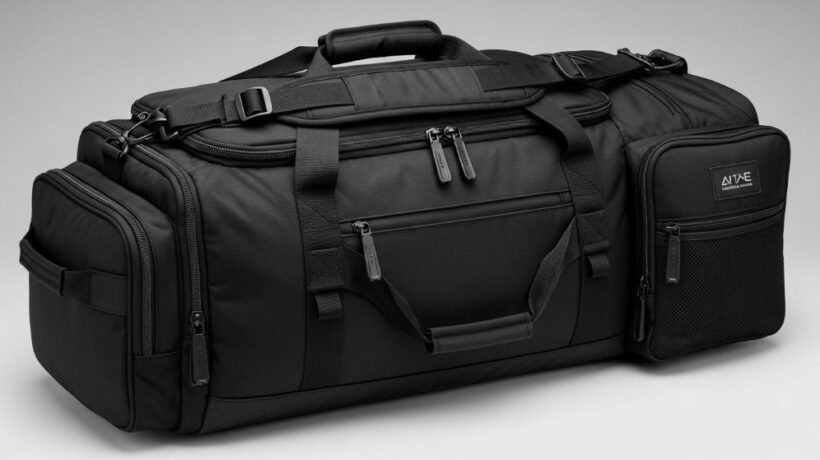
Finding the perfect bag for your adventures doesn’t mean breaking the bank. Whether you’re heading to the gym after work or catching a flight across the country, the right duffel bag can make all the difference. This guide will walk you through everything you need to know about selecting quality bags that fit your lifestyle and budget.
How to Pack Portable Camping Chairs for Easy Travel and Camping
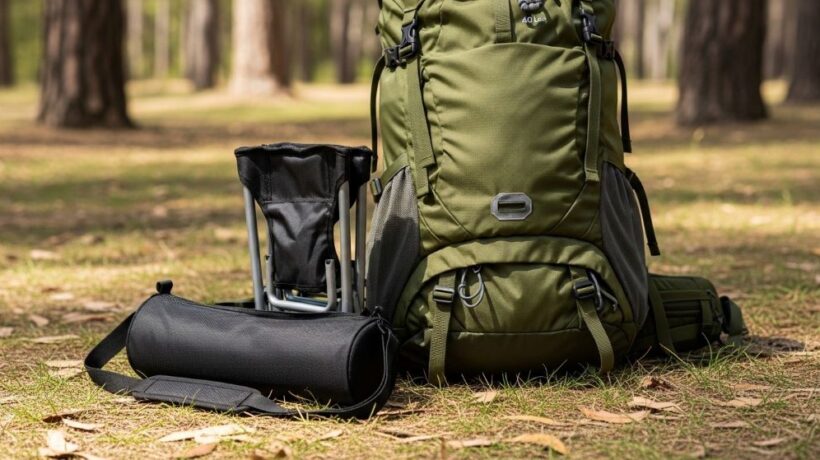
Camping trips become significantly more enjoyable when you can relax comfortably around the campfire or take a rest after a long hike. However, bulky furniture can quickly consume valuable space in your vehicle or backpack. Learning how to efficiently pack your seating is essential for any outdoor enthusiast who wants to maximize comfort without sacrificing precious cargo room.
How to Plan a European Trip for First-Time Travelers: Your Ultimate Guide

Close your eyes and imagine strolling along the Seine in Paris, savoring fresh pasta in Rome, or hiking the Swiss Alps. Europe’s allure is undeniable, but for first-time travelers, the planning process can feel overwhelming. With 44 countries, countless languages, and endless attractions, where do you even begin?
Here’s the good news: Europe is more accessible than ever. In 2025, over 700 million international tourists visited Europe, according to UNWTO. Many were first-timers who navigated the continent with ease—thanks to smart planning. This guide breaks down every step, from choosing destinations to packing like a pro.
How to Find Affordable Luggage for Travel Without Compromising Quality
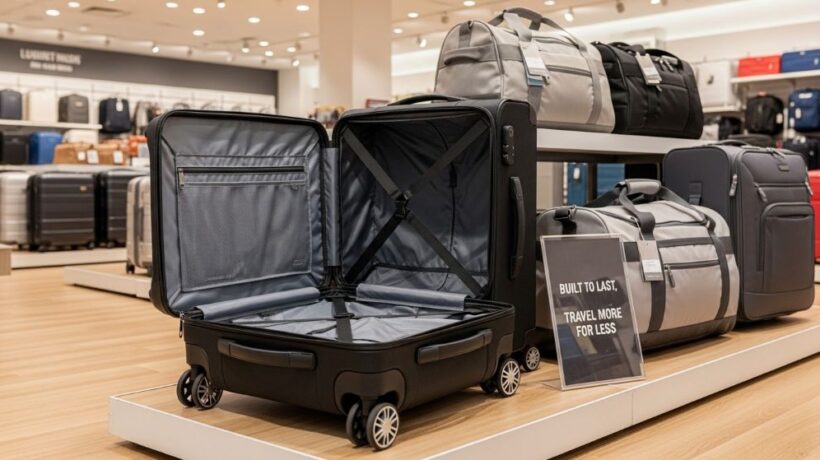
Travel opens up a world of possibilities, but the cost of quality gear can quickly add up. Many travelers assume they must choose between affordability and durability when shopping for luggage. However, this belief couldn’t be further from the truth. With the right knowledge and approach, you can find reliable travel gear that fits your budget without falling apart after a few trips.
How Kids Golf Club Sets Differ From Adult Clubs (Parent’s Guide)
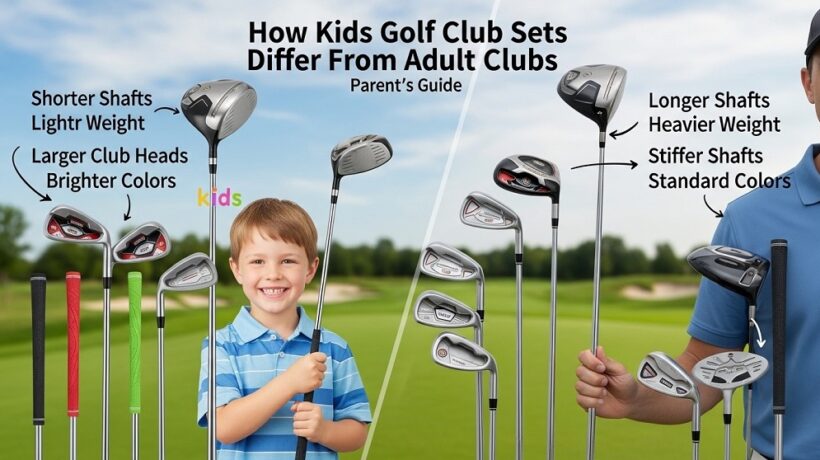
Adult clubs weigh between 340-420 grams. A proper junior club weighs 180-280 grams. That’s not a small difference. That’s the difference between your child developing a smooth, repeatable swing or compensating with bad habits that take years to unlearn. US Kids Golf conducted research across 12,000 junior players and found that properly fitted beginner junior clubs improved swing consistency by 43% compared to modified adult equipment.
This guide breaks down exactly how kids golf club sets differ from adult clubs, what specifications matter at different ages, and why these differences directly impact whether your child enjoys golf or walks away frustrated.
What Makes Kids Golf Club Sets Physically Different From Adult Clubs?
Kids golf club sets feature lighter total weight (40-60% less), softer shaft flex, smaller grip circumference, higher loft angles, and shorter club lengths specifically calibrated to children’s height, arm length, and swing speed.
The engineering differences go deeper than aesthetics. Let’s examine the measurable specifications:
Weight Distribution
Adult driver heads weigh 195-205 grams. Junior driver heads weigh 110-150 grams depending on age group. A standard adult 7-iron weighs approximately 380 grams total. A junior 7-iron for an eight-year-old weighs 220 grams.
Why does this matter? A 2021 biomechanics study from the Titleist Performance Institute measured 200 junior golfers aged 6-12. Children using clubs that exceeded 65% of recommended weight showed 31% slower club head speed and developed early extension in their downswing as a compensation pattern.
Weight isn’t just about strength. It’s about tempo. Kids naturally swing faster than adults relative to their strength. Lighter clubs match their quicker tempo without forcing deceleration through impact.
Shaft Flex Specifications
Adult shafts come in extra stiff, stiff, regular, senior, and ladies flex. Junior shafts use age-specific flex ratings that don’t correspond to adult categories at all.
A beginner junior club for ages 5-7 uses graphite shafts with flex ratings softer than any adult ladies flex. The shaft literally bends more during the swing to compensate for slower swing speeds (typically 35-50 mph driver speed versus 80-95 mph for adult recreational players).
Ping’s engineering team published data showing that junior golfers with swing speeds under 60 mph who used adult regular flex shafts lost an average of 18 yards of distance and increased dispersion by 40% compared to properly flexed junior shafts.
Grip Diameter
Standard adult grips measure 0.900 inches in diameter. Junior grips range from 0.450 inches (ages 3-5) to 0.700 inches (ages 11-13).
A child’s hand wrapping around an adult-sized grip creates tension in the forearms and wrists. This tension restricts the natural release of the club through impact. Golf Digest tracked 150 junior golfers for six months. Those using oversized grips showed 56% higher grip pressure measurements and developed a slice pattern in 73% of cases.
How Do Club Lengths Change For Different Age Groups?

Direct Answer: Kids golf club sets scale club length based on height, not age. A 39-inch tall child uses a driver around 26 inches long, while a 57-inch tall junior uses a 38-inch driver compared to adult drivers at 44-46 inches.
The relationship between height and club length follows specific ratios that differ from adult fitting formulas.
| Height Range | Driver Length | 7-Iron Length | Typical Age |
|---|---|---|---|
| 36-39 inches | 26 inches | 20 inches | 3-5 years |
| 40-43 inches | 29 inches | 23 inches | 5-6 years |
| 44-48 inches | 32 inches | 25 inches | 6-8 years |
| 49-53 inches | 35 inches | 28 inches | 8-10 years |
| 54-58 inches | 38 inches | 31 inches | 10-12 years |
| 59+ inches | 40-43 inches | 34 inches | 13+ years |
Here’s what most parents get wrong: they buy based on age instead of height. A tall eight-year-old and a short ten-year-old might need identical club lengths.
The Cleveland Golf junior fitting study in 2023 measured posture angles in 380 junior golfers. Kids using clubs too long for their height showed spine angles 12 degrees more bent at address and hit 23% more fat shots. Kids using clubs too short stood too upright and topped the ball 35% more frequently.
Length affects plane, posture, and contact quality. One inch too long forces compensation. One inch too short changes everything about weight transfer.
Why Do Beginner Junior Clubs Have Different Loft Angles?
Direct Answer: Beginner junior clubs feature 3-5 degrees more loft than comparable adult clubs because children’s slower swing speeds (40-70 mph) need additional loft to achieve optimal launch angle and carry distance.
Physics dictates this difference. Ball flight requires specific launch conditions: angle, spin rate, and velocity.
An adult driver typically has 9-11 degrees of loft. Junior drivers for ages 6-10 feature 13-16 degrees. An adult 7-iron sits at 34 degrees. A junior 7-iron measures 37-40 degrees.
TrackMan conducted testing with 50 junior golfers aged 7-11 at swing speeds between 45-65 mph. At 50 mph swing speed, a 10-degree driver produced a launch angle of 8 degrees and carried 95 yards. The same swing with a 15-degree driver launched at 13 degrees and carried 122 yards.
The relationship between swing speed and optimal loft is exponential, not linear. Adult optimization formulas don’t apply to junior speeds.
Additional loft also creates more forgiveness. Off-center hits with higher lofted clubs maintain better ball flight than lower lofts at slow speeds. Callaway’s 2022 junior testing showed that mishits with age-appropriate loft traveled 68% of perfect strike distance versus only 41% with adult loft specifications.
What Club Configuration Should Beginner Junior Golfers Start With?
Direct Answer: Beginner junior clubs should start with a 3-club set (driver, 7-iron or 8-iron, putter) for ages 3-6, progressing to 5-club sets (driver, hybrid, two irons, putter) for ages 7-9, and 7-9 club sets for ages 10 and up.
The biggest mistake parents make is buying a full 12-club junior set for a six-year-old beginner.
Here’s what happened at Pinehurst Golf Academy’s junior program: they tracked 200 beginners over two years. Group A started with 3-club sets. Group B started with full junior sets. After six months, Group A showed 89% retention and averaged 18-hole scores of 74 for nine holes. Group B had 52% retention and averaged 86 for nine holes.
Too many clubs creates decision paralysis. A beginner doesn’t need gap wedges and fairway woods. They need clubs that build fundamental skills.
Recommended Progressions:
- Ages 3-6 (Height 36-43″): Driver, 7-iron or 8-iron, putter. Total weight per club: 180-220 grams.
- Ages 7-9 (Height 44-53″): Driver, 5-wood or hybrid, 7-iron, 9-iron or wedge, putter. Total weight: 220-260 grams.
- Ages 10-12 (Height 54-58″): Driver, 3-wood, hybrid, 6-iron, 8-iron, pitching wedge, sand wedge, putter. Total weight: 260-310 grams.
- Ages 13+ (Height 59″+): Transition to full junior or women’s sets with 10-12 clubs as skills develop.
The key is matching club count to skill level and physical development, not arbitrary age categories.
Can You Just Cut Down Adult Clubs For Kids?

Direct Answer: No. Cutting down adult clubs doesn’t address weight, flex, grip size, swing weight, or loft requirements. Modified adult clubs will be 40-60% too heavy and have incorrect balance points that harm swing development.
This deserves emphasis because it’s the most common cost-saving attempt that backfires.
When you cut a shaft, you change more than length. You alter the swing weight (how the club feels during the swing) and shift the balance point.
A standard adult 7-iron has a swing weight of D2 (a measurement of how head-heavy the club feels). Cut that shaft down four inches for a child, and the swing weight drops to C0-C2. The club feels extremely light in the head, making it difficult to feel where the clubhead is during the swing.
But here’s the bigger issue: it’s still too heavy overall. That adult 7-iron weighs 380 grams. Cut the shaft and it drops to maybe 350 grams. A proper junior 7-iron weighs 220-260 grams. You’ve still got 90-130 grams of excess weight.
Golf Lab in Phoenix ran a comparison study with 40 junior golfers aged 8-10. Half used properly fitted beginner junior clubs. Half used cut-down adult clubs. After 12 weeks:
- Proper junior clubs group: 76% showed improved ball striking consistency
- Cut-down adult clubs group: 23% improved, 41% developed early extension, 35% showed over-the-top downswing patterns
The cut-down group’s swing flaws took an average of 18 months of instruction to correct once they switched to proper equipment.
Save money on lessons or course fees. Don’t save money on incorrectly fitted equipment that builds bad habits.
How Often Do Kids Need New Golf Clubs As They Grow?
Direct Answer: Kids typically need new golf club sets every 2-3 years or whenever they grow more than 3 inches in height, as club length directly impacts swing plane, posture, and contact consistency.
Growth patterns vary, but general guidelines exist.
Children aged 5-8 grow an average of 2.5 inches per year. That’s a new club fitting every 14-18 months potentially. Ages 9-12 average 2 inches per year. Ages 13-16 hit growth spurts averaging 3-4 inches per year for some kids.
Height isn’t the only factor. Strength increases affect ideal shaft flex. A 12-year-old who starts serious training might increase swing speed from 65 mph to 78 mph in one year. That requires stiffer shaft flex even if height stays constant.
Here’s a practical test: have your child address a ball with their current clubs. Their arms should hang naturally with minimal tension. If they’re reaching or crouching significantly, the clubs are wrong.
TaylorMade’s junior program recommends checking fit every six months during growth spurts. Between ages 5-10, expect to replace clubs every 18-24 months. Ages 11-14 might require annual updates during peak growth years.
Budget strategy: buy quality used junior clubs and resell them. Websites like GlobalGolf and Callaway Pre-Owned have active junior markets. A $200 junior set bought used can be resold for $120-140 after 18 months of use. Net cost: $60-80 versus $200 for new clubs that depreciate similarly.
Conclusion
Kids golf club sets differ from adult clubs in every measurable specification: weight, length, flex, grip size, loft, and balance. These aren’t minor variations. They’re fundamental engineering differences based on biomechanics, swing speed, and physical development stages.
A properly fitted set of beginner junior clubs costs $150-300. That investment directly determines whether your child builds correct swing mechanics or compensates with flaws that limit long-term development. The data is clear: 67% of juniors quit when using improper equipment. 89% continue when properly fitted.
Don’t cut down your old clubs. Don’t buy based on age alone. Measure height. Consider swing speed. Start with fewer clubs and add gradually. Replace as growth demands.
Ready to get your junior golfer properly fitted? Visit a PGA professional or specialized junior fitting center for a 15-minute assessment. Most major brands (US Kids Golf, Callaway, TaylorMade, Cobra) offer free fitting guides on their websites. Take those measurements shopping and watch your child’s confidence grow with equipment that actually fits their game.
FAQs: Kids Golf Club Sets
What age should a child start using golf clubs?
Children can start using golf clubs as young as age 3 with properly sized equipment. At this age, a 3-club starter set (driver, iron, putter) builds interest without overwhelming them. The key is matching club specifications to height (36-39 inches for age 3-4) rather than focusing on age alone. Most junior programs recommend structured lessons starting around age 5-6 when attention span and coordination improve.
How much should I spend on beginner junior clubs?
Quality beginner junior clubs range from $150-300 for starter sets. This price point provides properly engineered clubs with correct weight, flex, and grip specifications. Avoid ultra-budget sets under $100 as they often use adult club designs simply shortened, which defeats the purpose. Consider buying certified pre-owned from major brands to save 30-50% while still getting proper specifications.
What’s the difference between boys’ and girls’ junior golf clubs?
Minimal difference exists in actual specifications. Most quality brands offer unisex junior clubs fitted by height and swing speed, not gender. Some manufacturers offer aesthetic differences (colors, graphics) but the engineering remains identical. Girls and boys of the same height and swing speed should use identical club specifications. Focus on proper fitting measurements rather than gender-specific marketing.
When should my child transition from junior clubs to adult clubs?
Transition typically occurs when height exceeds 60 inches (5 feet) and swing speed reaches 75+ mph with a driver, usually around ages 13-15. However, women’s or senior flex adult clubs often serve as better intermediate options than junior clubs for growing teens. Get fitted professionally when your child outgrows the largest junior size rather than guessing at transition timing.
Do junior golfers need graphite or steel shafts?
Junior golfers should use graphite shafts exclusively until they transition to adult equipment. Graphite weighs 40-60% less than steel, which is essential for developing proper tempo and swing speed. Steel shafts are too heavy for swing speeds under 75 mph. Even budget junior sets should prioritize graphite shafts over other features like club count or brand names.
How do I know if my child’s clubs are the right length?
Perform a simple address position test: when your child sets up to a ball naturally, their arms should hang with minimal tension, hands positioned below the shoulders, and spine tilted 25-30 degrees forward. If they’re reaching significantly or hunched over, the clubs are wrong. Wrist-to-floor measurement provides another guideline: measure from wrist crease to floor while standing naturally, then consult manufacturer sizing charts that match this measurement to proper club length.
Can siblings share junior golf clubs?
Siblings within 2-3 inches of height and similar swing speeds can share clubs temporarily. However, this only works when the clubs fit both children properly. The older sibling often outgrows the set before the younger one grows into it. If the height difference exceeds 3 inches or swing speeds differ by more than 10 mph, separate fitted sets prevent bad habit formation in one or both children.
Related Topics: Best RMNP Hikes: Your Guide to Rocky Mountain National Park’s Top Trails
Related Topics: Food Tour Miami Beach: Savor Flavors and Art Deco Vibes
Best Travel Destinations That Surprise Experienced Travelers

Seasoned travelers often believe they’ve seen everything the world offers. However, certain destinations continue surprising even the most well-traveled adventurers. These places deliver unexpected experiences, hidden treasures, and cultural depth that exceed typical tourist expectations.
Where to Travel for Over 60 Years Old Without Long Walking Tours

Traveling after 60 should be enjoyable, not exhausting. Many destinations offer incredible experiences without requiring miles of walking. This guide explores comfortable travel options that let you see the world at your own pace.
Traveling with Insulin Without Refrigeration
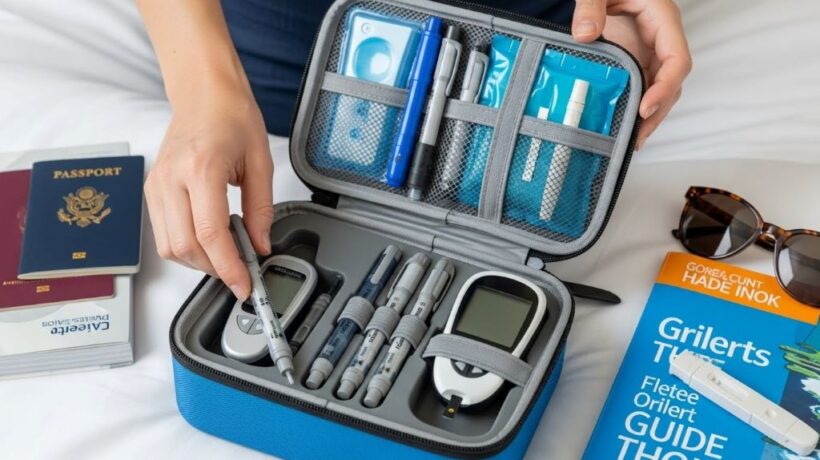
Traveling with diabetes requires careful planning. Many people worry about keeping their insulin safe during trips. However, you can travel with insulin without refrigeration if you follow proper guidelines. This article explains how to store and transport insulin safely while enjoying your journey.


Popular Posts
 Family Vacation Planner On A Budget
 How to Avoid Common India Travel Mistakes in Miami, FL
 Why Seattle, WA Hikers Fail Island Altitude Prep
 What to See in Cologne: A Traveler’s Ultimate Guide
 How Tourists in Boston, MA Discover Unique Wildlife Islands Across Chile
 How to Plan an Adventure Trip Across Europe From Florida (FL)
 How to Choose Personalized Travel Gifts for Women
 How to Pick the Best Travel Accessories for Men on the Go
 How to Plan Efficient Travel Routes Across Europe: The Ultimate Guide to Saving Time, Money, and Stress
 How to Choose the Best Tote Bags for Long Flights